If you’ve been running a business for even a short while, you probably already know one thing: customers don’t behave in straight lines. One minute they’re scrolling through Instagram, the next they’re looking something up on Google, and then suddenly they remember an email they meant to reply to.
People don’t stay on one platform anymore. And honestly, none of us do either.
That’s exactly why a multi-channel marketing approach is not just a buzzword — it’s a practical necessity. Let’s talk about it in a simple, honest, real-world way.
So… What Exactly Is Multi-Channel Marketing?
At its core, it just means showing up in multiple places where your customers hang out.
Not in a spammy or overwhelming way.
More like, “Hey, we’re here if you need us.”
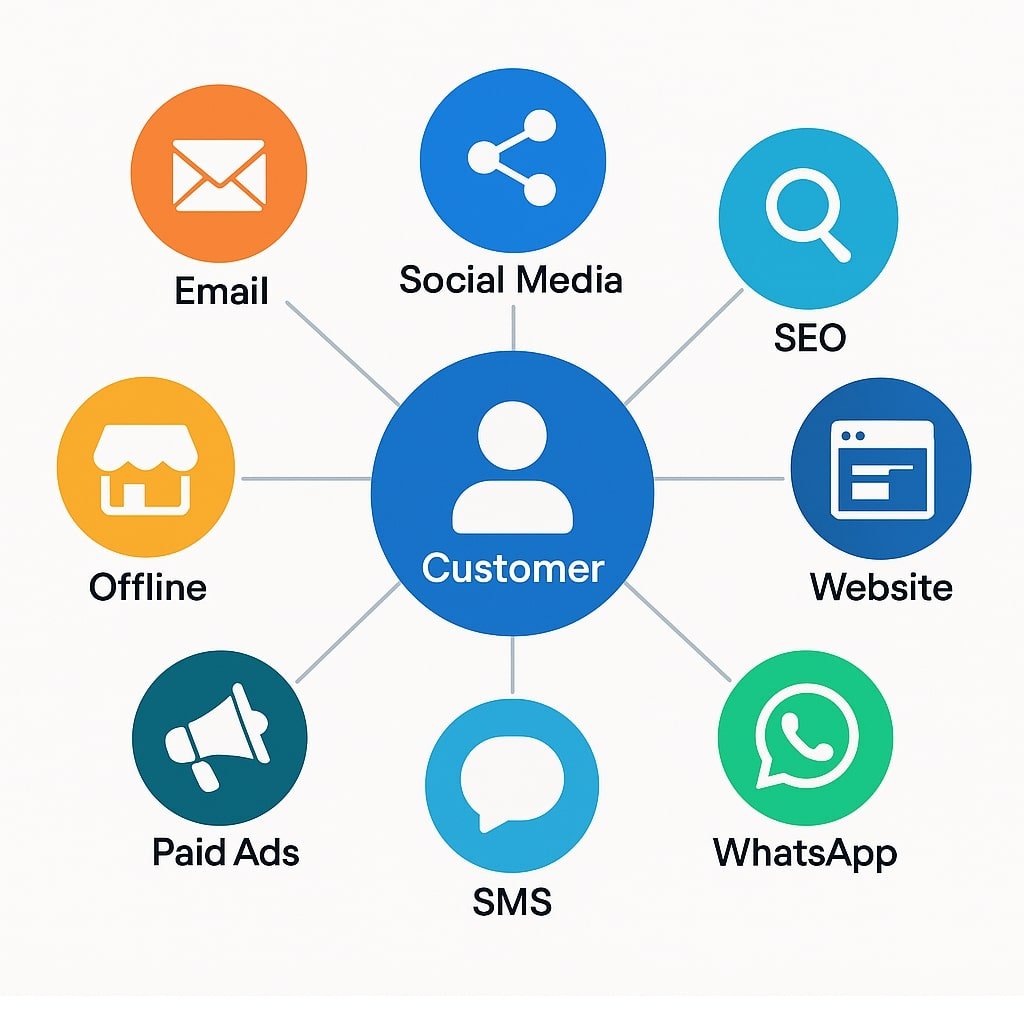
These “places” could be:
Instagram or Facebook
Google search
YouTube
Email marketing
WhatsApp updates
Your website or blog
Paid ads
Even offline events or print brochures
Every channel plays its own role. Each one touches the customer differently.
Why It Matters (Especially Now)
1. Because customers are everywhere
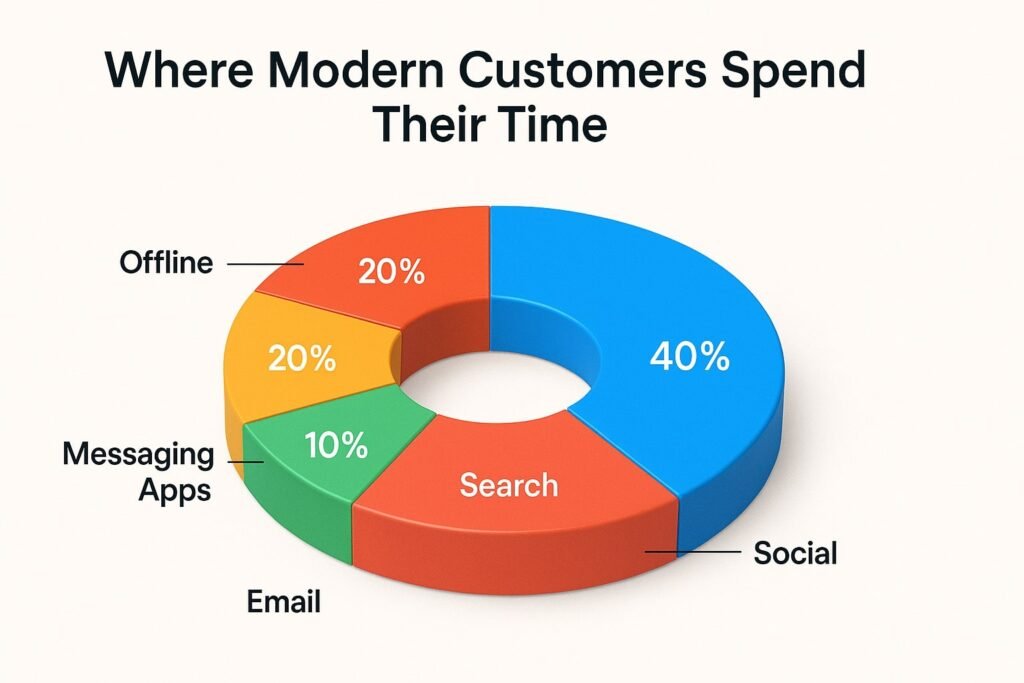
Let’s be honest — the average person checks their phone way too many times a day. You, me, everyone.
They don’t sit on one app and wait for you to market to them. They jump between apps, websites, videos, and messages.
If your business appears only on one platform, it’s like opening a shop inside a giant mall… but keeping the shutters down most of the time.
2. Visibility builds trust
People trust what they see more often.
When someone sees your brand on Google, then again on Instagram, then maybe signs up for your email newsletter — it feels familiar to them.
And familiarity is half the battle.
3. Different channels speak to different moods
This one is underrated.
When people are on Google, they’re searching with intent.
On Instagram, they’re browsing casually.
On email, they’re usually in a more focused mindset.
On YouTube, they want explanations or entertainment.
Your message hits differently depending on where they are and what they’re feeling at that moment.
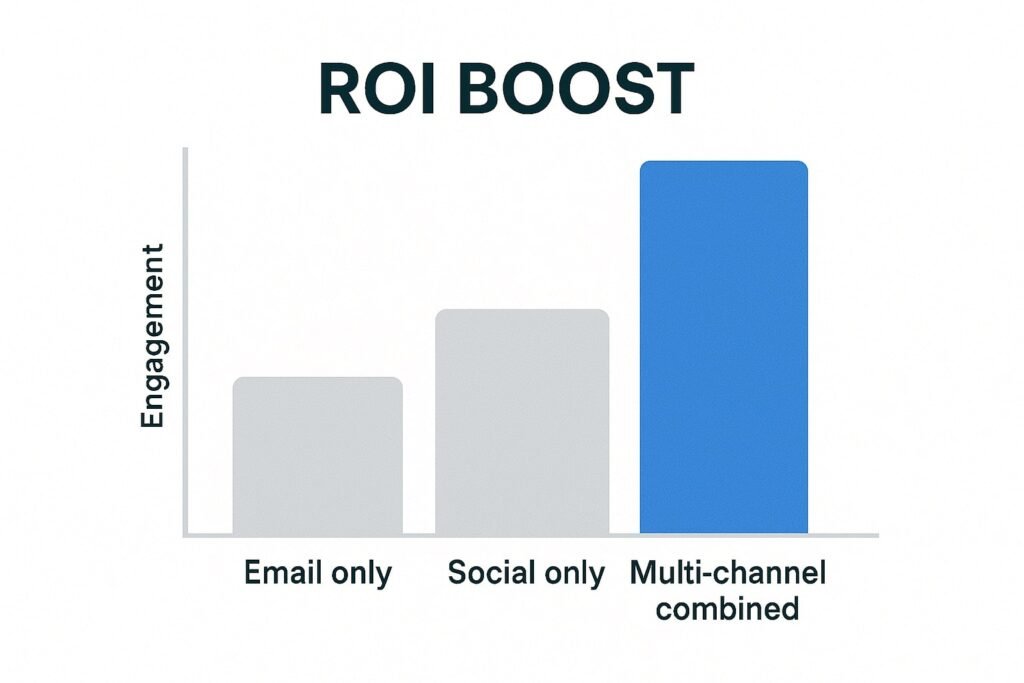
4. Better conversion chances (because people need more than one touch)
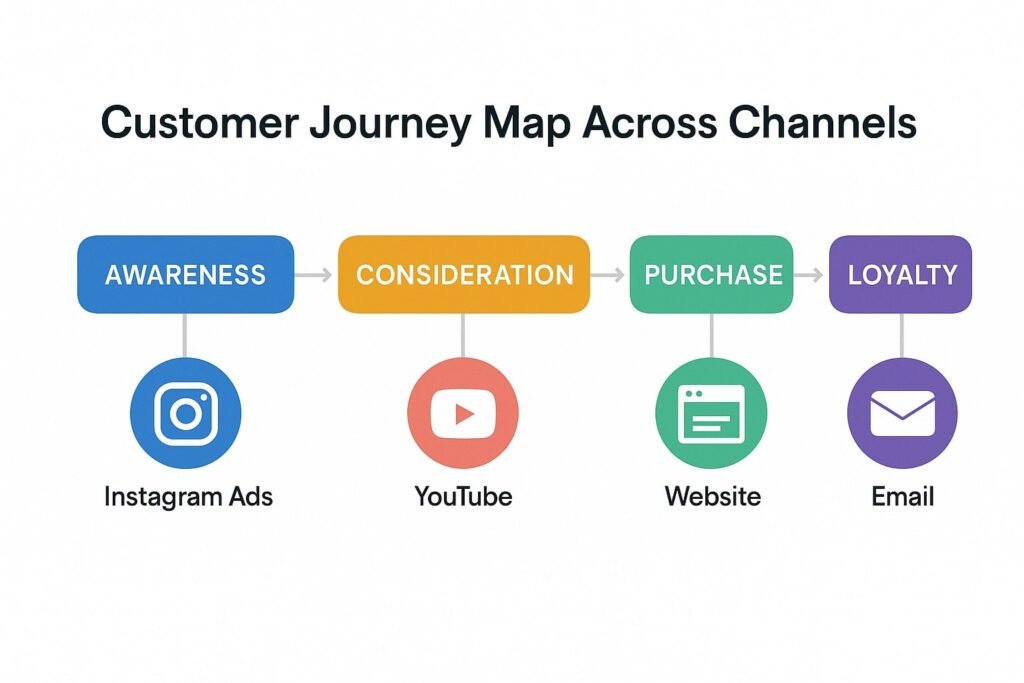
Most customers don’t buy the first time they see something.
They warm up. They compare. Sometimes they forget and need reminders.
Multi-channel marketing supports this natural behavior instead of fighting it.
What You Really Gain From a Multi-Channel Strategy
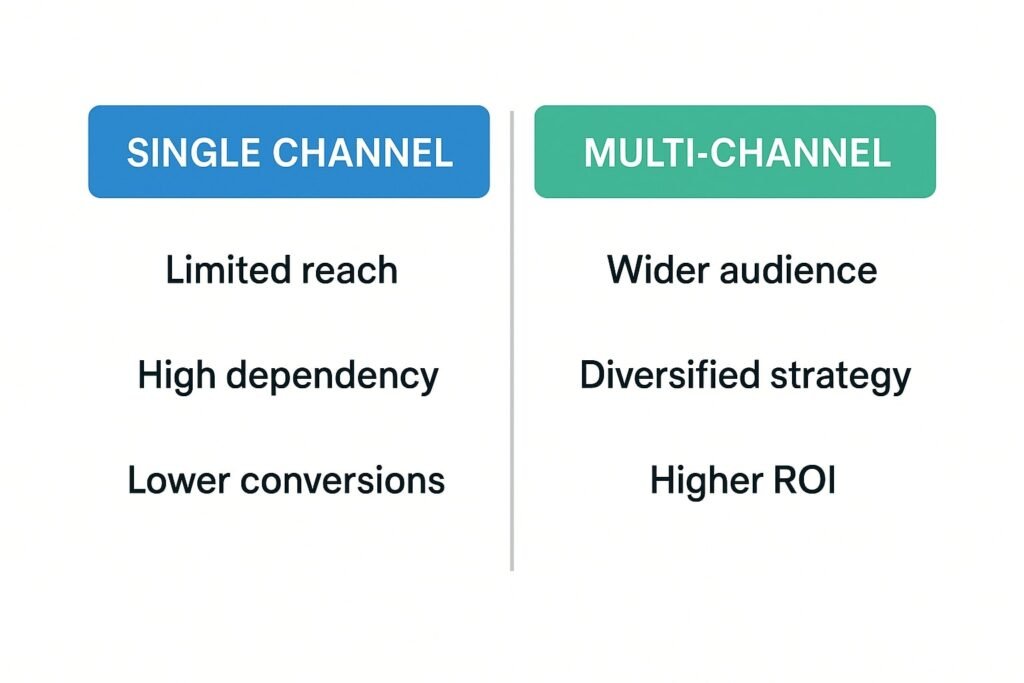
1. A bigger audience (without working 5 times harder)
Every platform has its unique crowd.
Instagram might bring the younger audience.
LinkedIn attracts professionals.
Google brings people who are actively searching.
Email helps you nurture people who’ve already shown interest.
Together, all these platforms expand your reach naturally.
2. Algorithm-proof marketing
If you’ve ever had a social media post go viral one day and flop the next, you already know this pain.
Relying on one platform is risky. Algorithms change without warning. A multi-channel approach protects you from sudden drops.
3. Stronger relationships with customers
The more touchpoints you have, the more your customer feels, “I know this brand.”
It doesn’t happen overnight — but seeing a brand across multiple places creates a sense of reliability. People like buying from brands they feel connected to.
4. Better personalization
Every platform tells you something about your customer’s behavior.
Instagram shows what catches their eye
Google shows what they’re searching for
Emails show what they engage with
Your website shows how long they stay
Put all this together and you can create more relevant, helpful content.
A Simple Example: How Multi-Channel Actually Works
Imagine you run a digital marketing agency.
Here’s how a customer might discover you:
They see a helpful Instagram Reel you posted.
Later, they Google “best marketing agency near me” and your website pops up in the search results.
Out of curiosity, they sign up for your email newsletter.
A few days later, they see your ad while browsing Facebook.
Now that they recognize your brand, they finally click and enquire.
Would that enquiry have happened from Instagram alone? Probably not.
This is the real power of multi-channel visibility.
How You Can Start (Without Feeling Overwhelmed)
A lot of people think multi-channel means posting everywhere, every single day. Not true.
Here’s a more practical way:
1. Pick 3–4 channels that make sense for you
You don’t need to be everywhere.
Just be where your customers are.
2. Keep the message consistent
Your tone, approach, and branding should feel like the same person speaking across platforms.
3. Repurpose your content
One piece of content can work in multiple ways:
A blog → Instagram carousel
A YouTube video → LinkedIn post
A newsletter → Tweet thread
A case study → Ad content
This saves you time and keeps your presence steady.
4. Track what’s working (and what’s not)
Look at your:
Website traffic
Email open rates
Ad performance
Social media insights
These small numbers tell big stories.
5. Automate the boring stuff
Scheduling tools, CRM systems, email automations… all of these make multi-channel marketing much easier than it sounds.
Final Thoughts: Showing Up Matters
At the end of the day, multi-channel marketing is just about showing up.
Not everywhere, not all the time — but in the right places, consistently.
Customers don’t follow a straight-line journey anymore. They hop, explore, compare, and rethink.
Your brand needs to meet them wherever they are so you don’t lose the sale halfway.
A multi-channel approach helps you:
Stay visible
Build trust
Reduce risk
Understand your audience better
Convert more consistently
If you’re aiming for sustainable, predictable growth, multi-channel marketing isn’t an option anymore — it’s the foundation.