
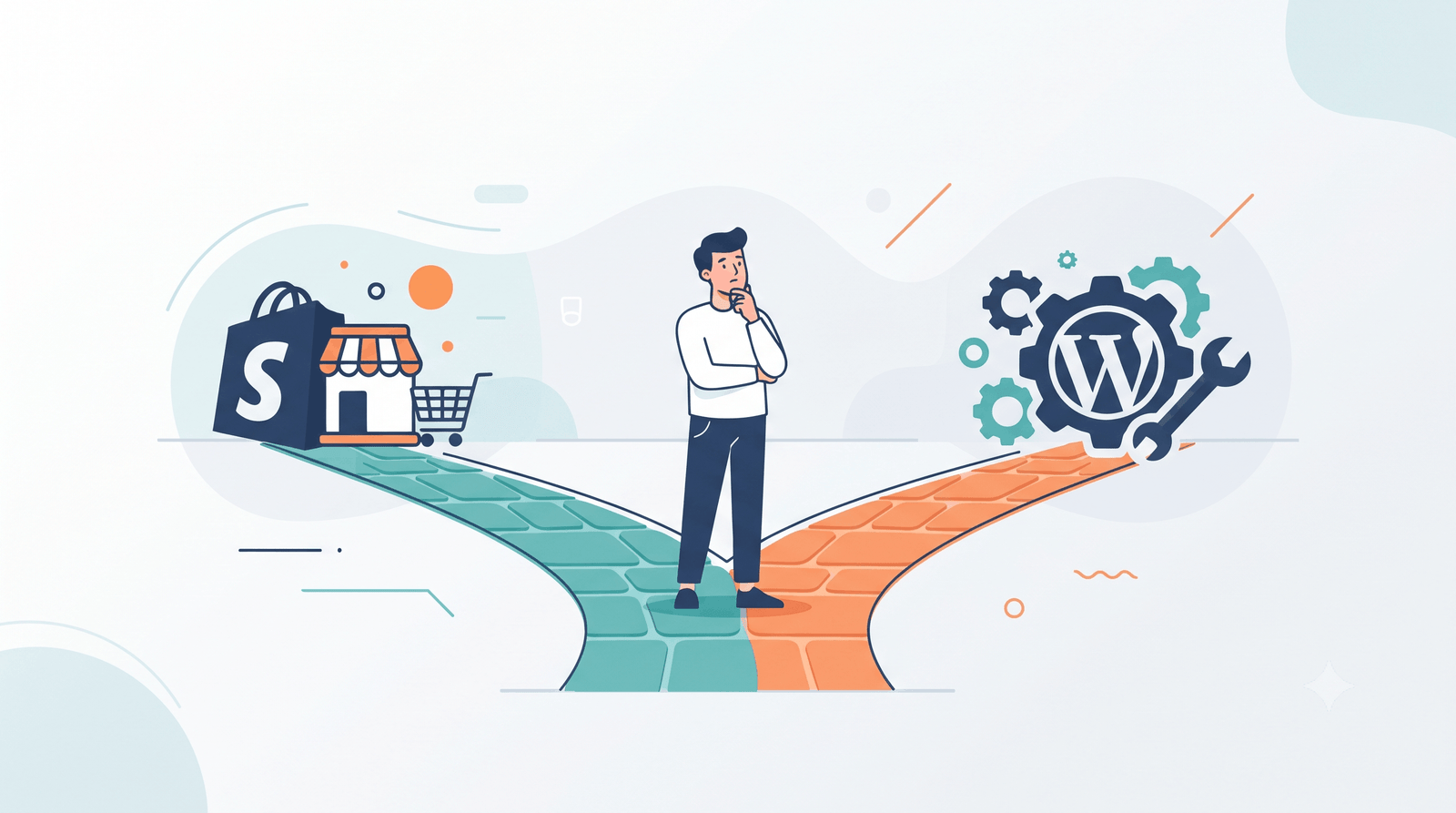
If you’re starting an online store, you’ve probably already run into this question: Shopify or WordPress? Everyone seems to have an opinion, and honestly, both sides make it sound like the other one is a mistake. It’s not that simple. There’s no universally “better” platform here — just a better fit for what you’re actually trying to do.
Let’s break it down without the hype.
How Much Do You Actually Want to Deal With?
Shopify is built so you don’t have to think much. Sign up, pick a theme, add your products, and you’re pretty much ready to go. Hosting, security, updates — all handled quietly in the background. If the idea of touching any technical settings makes you nervous, this matters more than people admit.
WordPress (usually with WooCommerce added on) gives you more freedom, but that freedom comes with more to manage. You’re picking your own hosting, keeping plugins updated, and generally taking on more of the behind-the-scenes work — or paying someone to take it off your hands.
Neither one is the “correct” choice here. It just depends on whether you want things mostly automated, or you’re okay handling (or hiring for) a bit more complexity.
The Cost Question Isn’t As Simple As It Looks
Shopify has a clean, predictable monthly fee, which is nice. But once you start adding apps, premium themes, and factor in transaction fees, that “predictable” number creeps up more than people expect.
WordPress can technically start cheaper — the core software is free. But hosting, decent plugins, and developer time all cost something, so your real cost depends a lot on how the site actually gets built.
If you want to know exactly what you’re paying every month without surprises, Shopify’s a bit easier to plan around. If you’re okay with some upfront effort in exchange for more flexibility later, WordPress can work out well.
How Much Do You Want To Customize Things?
This is honestly where WordPress wins for a lot of people. Since it’s open-source, you can build almost anything — the design, how checkout works, what data you collect, how it talks to other tools you use. If your business has needs that don’t fit neatly into a template, that flexibility matters.
Shopify is more locked into its own ecosystem. You can still build something that looks great, but if you need something outside what Shopify normally offers, you’re often looking at apps or developer work to get there.
What Are You Actually Selling?
If it’s a fairly standard store — physical products, a few variants, normal checkout — Shopify does this really well, and there’s not much reason to overcomplicate it.
But if your site needs to be more than just a store — maybe you also blog, offer services, or want e-commerce sitting alongside other content — WordPress tends to handle that combination more naturally, since it was never just built to be a store in the first place.
So Which One’s Actually Right For You?
Honestly, ask yourself these questions instead of just picking whichever platform your friend used:
- Do you want minimal technical involvement? → Shopify
- Do you want more control, even if it takes more setup? → WordPress
- Is your site just a store, or does it need to do more than that? → Simple store, Shopify. More than that, WordPress usually fits better.
There’s genuinely no wrong answer here — just the one that matches how hands-on you want to be, and what your business actually needs beyond “selling stuff online.” If you’re still stuck between the two, that’s worth talking through before committing, since switching platforms later is a bigger hassle than picking right the first time.
Not sure which one makes sense for you? Call us at 8750045400 and we’ll help you figure it out.